

Ask any saree lover where they look first, and the answer is almost always the same: the border. The border frames the whole drape, carries the heaviest craft, and decides whether a saree feels ordinary or extraordinary.
What a scalloped border is
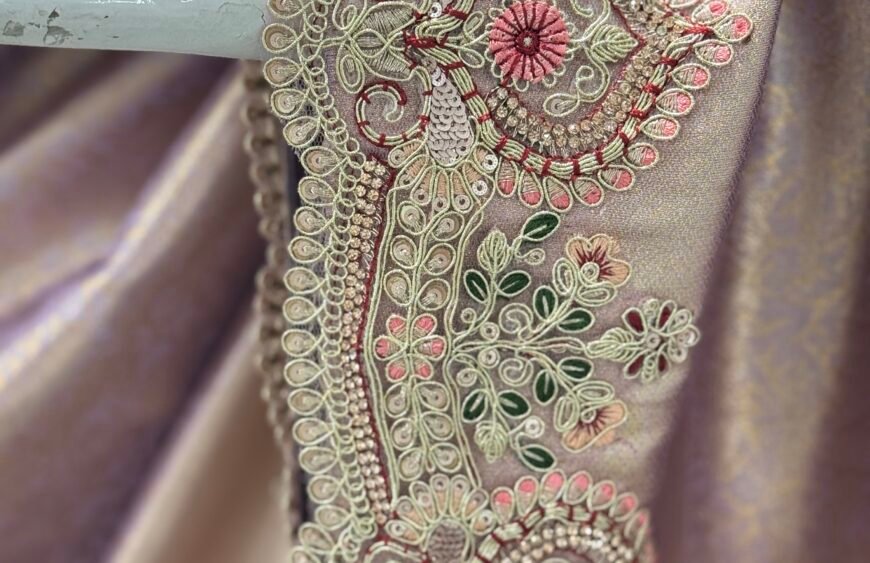
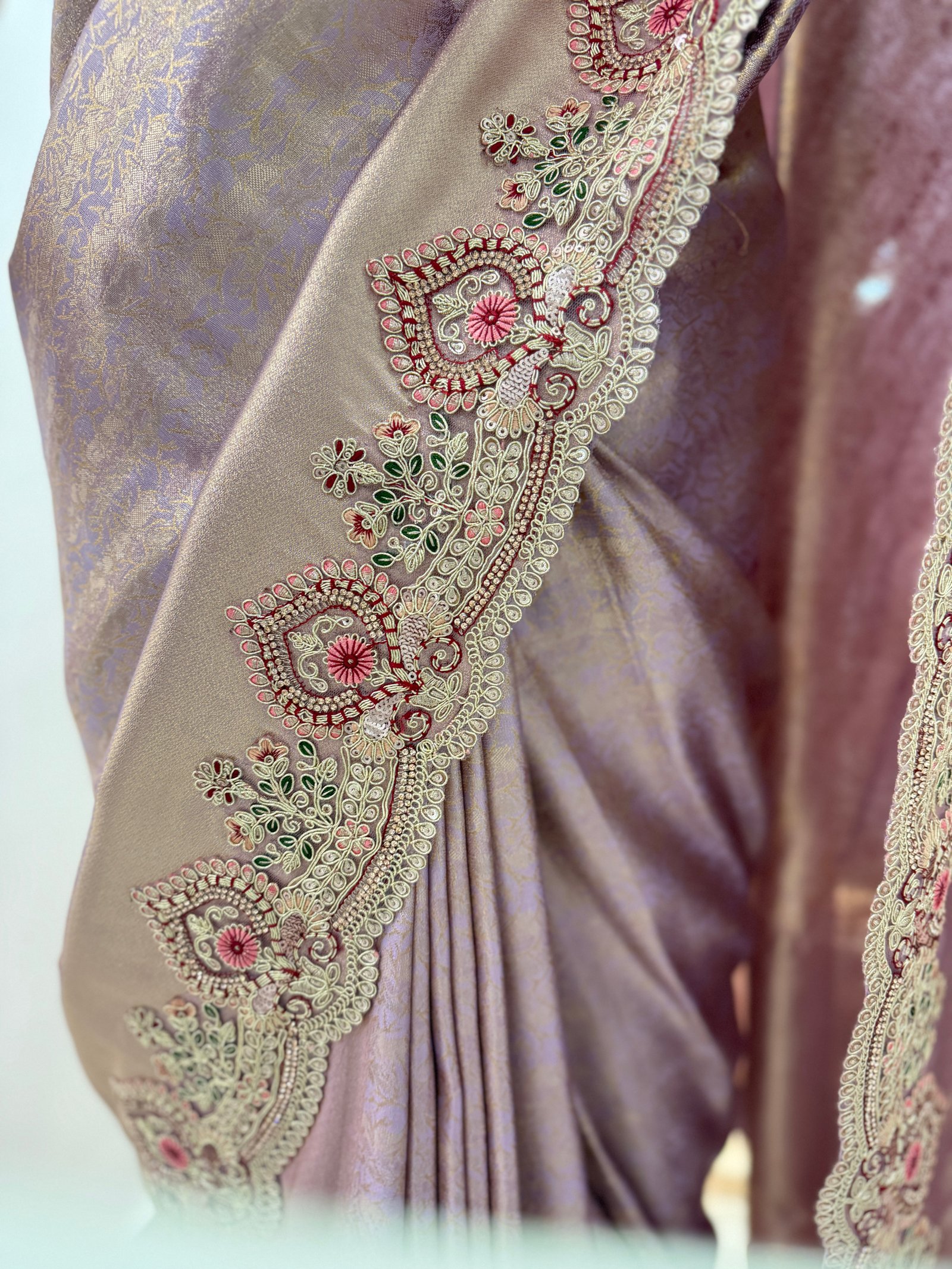
A scalloped border curves in a repeating wave along the edge of the saree, instead of running straight. Each curve is embroidered individually, often with a floral motif sitting inside it. It is slower to make than a straight border — and far more graceful when the saree moves.
The motifs inside the work
Look closely at a hand-finished border and you will find a small garden: flowers in pink and red, leaves in green, vines connecting them, and tiny dots of metallic thread catching the light. On the pallu, the same motifs often appear as standalone medallions, so the design continues when the saree is draped.
How to spot careful work
- Even tension: the embroidery should lie flat, without puckering the fabric beneath it.
- Clean edges: scallops should curve smoothly, with no loose threads at the turning points.
- Balanced motifs: flowers and leaves should repeat at regular intervals along the border.
- A finished back: turn the border over — tidy work is nearly as neat behind as it is in front.
Why we film our borders
Embroidery is a craft of millimetres, and a single photo cannot do it justice. That is why our product pages carry close-up videos of the border work — so you can judge the craft yourself before you buy.
Our Mauve Saree with Embroidered Scalloped Border is a fine example: a wide scalloped border with floral embroidery, and matching motifs on the pallu.